Carbohydrate Formula Ratio: CH₂O
Energy Storage
- Carbohydrates used to strore energy or provide strcutre
- Starch -> plants
- Glycogen -> Animals
- All monomers held together by covalent bonds (NOT Hydrogen bonds)
*Both starch and glycogen are polymers of glucose. Both provide energy and have alpha bonds (explained below). The only difference you need to know (for AP bio) is starch is energy for plants, while glycogen is energy for animals
Alpha vs. Beta Glucose
Alpha Glucose
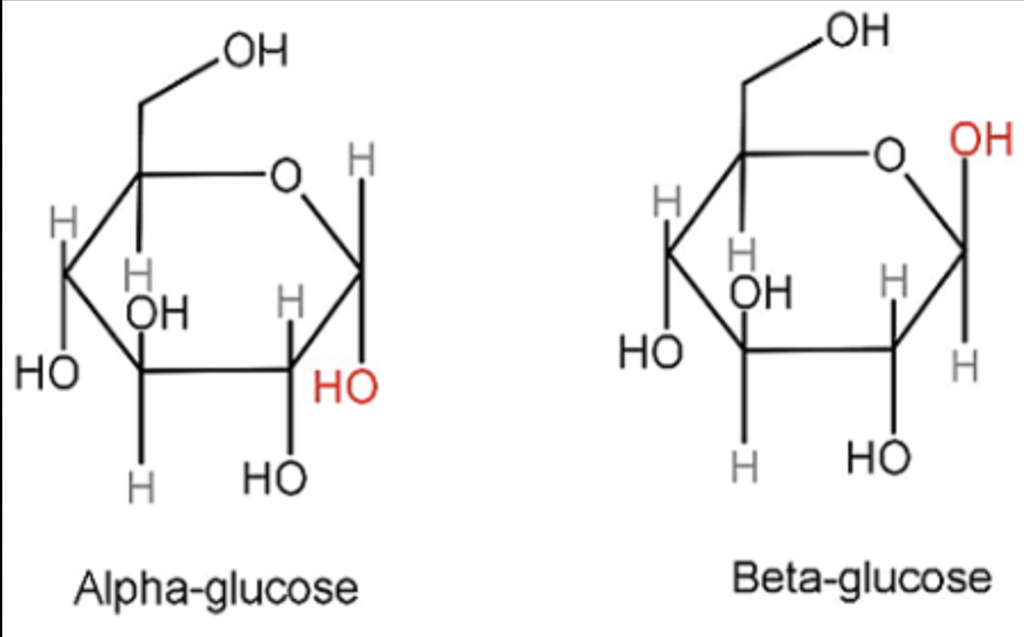
- The OH group on carbon 1 points down (see diagram)
- This lets it form 1-4 AND 1-6 bonds
- The 1-6 bond is what creates branch points
- Branched → more enzyme access → faster energy release → Used for energy
- Can only form starch and glycogen
Beta Glucose
- The OH group on carbon 1 points up (see diagram)
- Can only form 1-4 bonds
- Every other monomer has to flip to bond → creates a straight chain
- Straight → chains stack → strong structural support → Used for cell walls
- Can only form cellulose
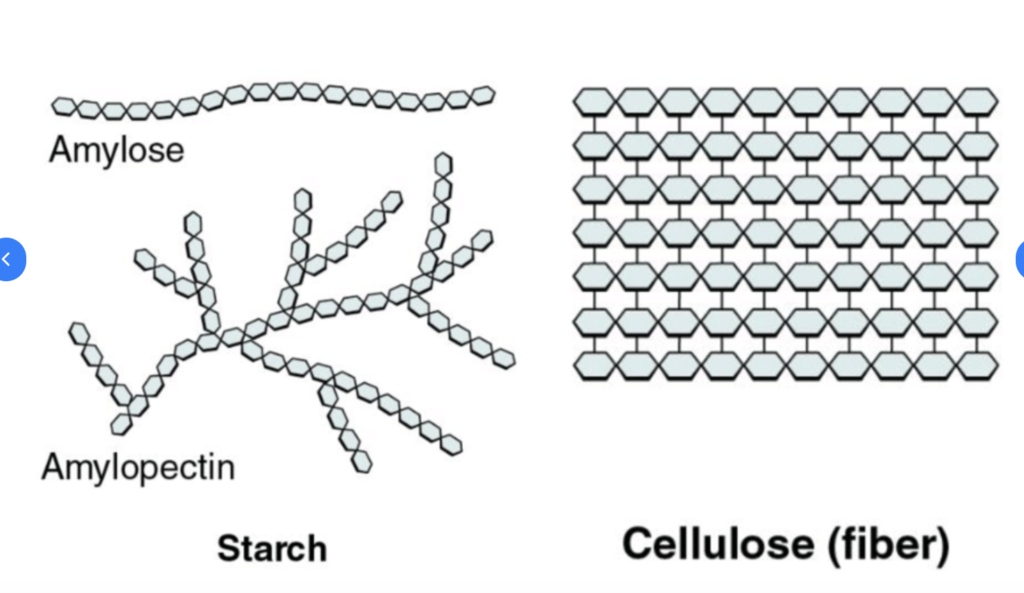
*Plants still need starch. However they use Amylose, while animals use Amylopectin. This is why animals have more energy then plants and can digest/use it quicker. Only plants have cellulose(used for cell walls)
Why it Matters:
- Alpha → used for energy storage (starch, glycogen) because branches allow quick breakdown
- Beta → used for structure (cellulose) because straight chains are strong and hard to break down
Extra Differences:
- starch vs cellulose : different chemical properties
- share same glucose monomers
- starch – does not flip so that’s why it is curved
- cellulose – every other monomer is flipped so it can form straight lines
TIPS:
- Focus on understanding how the structure of the molecule affects its function, rather than simply memorizing